KITLV 175 jaar

Vereniging KITLV

Winnaars Silvia de Groot Fund

Danick Trouwloon
2025

Synthesizing silences between wor(l)ds

The Silvia de Groot Fund supports the publication and dissemination of a zine titled Synthesizing silences between wor(l)ds, which was co-produced during a 3-day art-science retreat by a diverse group of inspiring early career Caribbean research professionals. The zine reflects the questions asked during the retreat, exploring what separates and connects us in Caribbean research.
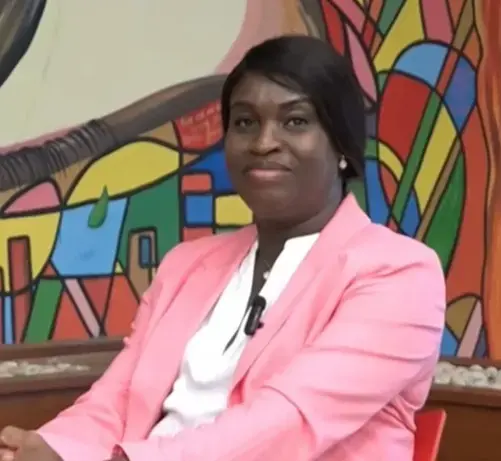
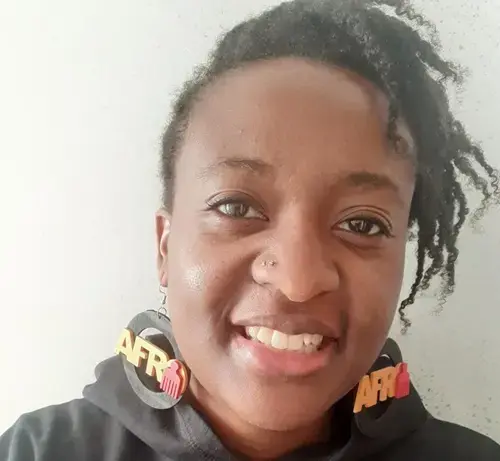
Ine Apapoe
2025

Female leadership in Maroon societies in Suriname

Female leadership within Maroon societies is a relatively new and underexplored field of research that can provide important insights into the changing role of women in traditional communities. Until 2004, formal leadership roles within these societies were almost exclusively reserved for men. The appointment of female captains since 2004 marks a significant shift in traditional power structures.

Charlene Jordan
2024

The natural dye colours of Winti: Cultural influences, chemical analysis and preservation of Suriname's Afro-spiritual textile heritage pre-1850

Charlene’s PhD research in History of Art (University of Glasgow) investigates the provenance and cultural significance of natural red dyes in the production of Winti textiles in Suriname during slavery.It seeks to analyse the chemical composition of natural dyeing materials and the historical and cultural context of their use by the enslaved population.

Tanya Sitaram
2024

Trapped in letters and petitions: Emotional narratives of Hindustani contract workers in Suriname, 1873-1921

This study examines how the emotional experiences of Hindustani contract workers in Suriname and Trinidad were expressed and shaped, mainly through correspondence between migrants and their families in India (letters, petitions and ego documents). Letters were not only a practical means of communication, but also an outlet for feelings such as homesickness, care for family and hope for reunion.

Martina Amoksi
2023

Kawina Ndyuka and Pamaka Maroon historical and contemporary use of traditional territory

This study will assess the 18th-20th century socio-economic development of Kawina Ndyuka and Pamaka Maroons (two of Suriname’s six groups) in eastern Suriname. The research will determine the drivers for historic period migratory and settlement choices of the enslaved Africans that escaped plantations in the Tempati Creek and Upper Commewijne river and their subsequent migration to the Marowijne river and Tapanahoni river.

Jonathan Tjien Fooh
2023

Kita Kene: Uncovering the process of healing from historical trauma among the Javanese community in Suriname

2023 marked the year to commemorate the abolition of Slavery in Suriname and the ABCSSS islands; on the 9th of August 2023 we commemorated 133 years of Javanese Emigration in Suriname, but this received far less attention. Furthermore, there has been increasing research on the lasting impacts of colonization and historical oppression, through the lens of ‘historical trauma’, with the focus on the holocaust and ongoing oppression Indigenous people still face in the present.

Margyene Booi
2022

Kralendijk: Protection of built heritage in a growing city center

In recent years the island of Bonaire has gone through a rapid development in different areas. One of them being construction on the island. The luster of Bonaire being a tranquil island is disappearing to the dismay of many inhabitants and visitors. In the past decades owners have been selling their historical family homes and land to investors and/or tearing them down in order to make room for apartment complexes and modern homes. 

Lysanne Charles
2022

When Island(er)s le(a)d: From exploitation to jollification to (re)imagination

An ethnographic exploration of the interaction between local knowledges and practices and the water, food, shelter, energy nexus on policy preparation and execution during and the hurricane season. An ethnographic exploration of the interaction between local knowledges and practices and the water, food, shelter, energy nexus on policy preparation and execution during and the hurricane season.Lysanne Charles’s PhD research will employ a transdisciplinary approach to analyze and bring together stakeholders from government and the community in order to create a dynamic, viable policy and strategy roadmap for the islands of St. Maarten, Saba and St. Eustatius.

Joandi Hartendorp
2021

Slavery and Holocaust education: A social imaginaries approach highlighting multi-directionality 

My PhD focuses on what has been canonised through history education about Dutch slavery and Holocaust history in the Netherlands and the reasons for this specific canonisation. I compare these two histories because, based on preliminary interviews, it became clear that perpetration is nuanced and externalised, and victims and descendants of victims are ‘othered’ through stereotypical and racist language in both history education practices. 

Miguel Keerveld
2021

Inclusion and plurality in multilingual and multicultural Suriname

Alakondre-fasi is known as performing ambiguity in Suriname. This model of identification is contextualized through artistic research as framework for creative production. This is performed in relation to art therapy, to explore social relations based on cultural diversity. To investigate Suriname’s historical relation with the Netherlands, the project ‘ALAKONDRE: A Space in Time’ sees alakondre-fasi as entanglement of counseling and curatorial producing.

Santosh Singh
2020

Plantation Esthersrust: Deciphering silent waters

Plantation Esthersrust was a 19th Century cotton plantation located at the confluence of the Warappa Canal and the Atlantic Ocean in Commewijne, Suriname, South-America. Plantation Esthersrust is Suriname’s only exposed cotton plantation with a rich history indicative of its shared heritage linking Suriname and the Netherlands. For years this plantation was submerged under the sea, but due to the 30-year cycle lies exposed during low tide.

Ina Apapoe
2020

Governance of traditional societies: The character and quality of traditional, modern and dual authority in Suriname

The research about the quality of dual governance in Suriname is in line with the discussion about the role traditional societies could or should play in governance, whether or not in cooperation with the state to develop their residential areas. The study focuses more specific on the role of good governance and related public values that are important in the governance of Ndyuka society by traditional and the modern state governance, in the logging, gold mining and education sector.

Nihayra Leona
2019

A Curaçaoan longitudinal study on the effectivity of a Papiamentu-English and Dutch-English bilingual education program

How effective are Curaçaoan bilingual secondary school programs in promoting students Papiamentu, Dutch and English language development? Western countries have embraced bilingual programs in primary and secondary education, but implementation and maintenance of these programs have been problematic in non-western low and middle income countries (e.g. Erling, Adinolfi & Hultgren, 2017; Simpson, 2017).

Keisha Wiel
2018

Language ideologies, education, and social media: Socialization practices in education and language attitudes on facebook

Through the relationship of language ideology, identity, and education, I will investigate how attitudes about language, that are seen Facebook, are taught to students in the classroom and its effects on identity formation in a formal educational setting in Aruba and Curaçao.  There are still notions that Papiamentu, in contrast to Dutch, is not suitable as a language of instruction because it hinders students’ access to universities. 

Mitchell Esajas
2017

Black, Dutch & radical: Exploring the politics of black Dutch radicals

Documents and articles found in the Black Archives suggest that there is a longer history of black radical movements, intelectuals and organizers than. Much research has been done on black radical movements, organizers in the Anglophone world but relatively little research has been done about black radicals in the Dutch context. Based on archival research I aim to gain more insight in the position and relation between Dutch radical intellectuals and organizers and their Caribbean counterparts with a focus on Otto Huiswoud.

Nihayra Leona
2017

Het Engels én het Papiaments; Een exceptioneel Caribisch geval van tweetalig onderwijs in het hoger secundair onderwijs

In augustus 2018 opent op Curaçao de eerste havo/vwo school die het Engels én het Papiaments als instructietaal hanteert. Deze nieuwe onderwijsvorm wijkt sterk af van de status quo: immersie in de voormalige koloniale taal, het Nederlands. Creoolse talen worden zelden als officiële instructietaal ingezet in het hoger secundair onderwijs. Dit terwijl tweetalig onderwijs, dat gebruik maakt van de moedertaal van de meerderheidskinderen, effectief kan zijn voor de ontwikkeling van zowel de moedertaal als een tweede taal.

Emilie van Heydoorn
2016

“And we neglected the mind” (Clemencia 1999); The reproduction of coloniality in learning and teaching practices in primary education on Curacao

This research addresses the issues of the primary education system, which is proved to be insufficient and inadequate in preparing the majority of students for a successful completion of their education, (Clemencia 1999, 11). Education plays an essential role in the social and economic development of the Island of Curacao. 

Durwin Lynch
2016

Embracing ‘Brua’; A first step towards facilitating meaningful and effective collaboration between western health professionals and traditional healers

Brua is an Afro-Caribbean religion and healing tradition practiced on Aruba, Bonaire and Curacao that exists for more than 350 years, and which plays a significant role in how (local) individuals make sense of their health and wellbeing. While western/biomedical approaches to health are dominant in some settings, there is an increasing amount of literature showing that people may use different explanatory models to attribute the cause of deviations in health (both mentally and physically) to supernatural occurrences or to previous wrongdoings, and seek relief through rituals and practices performed by traditional healers.

Daphina Misiedjan
2015

Building bridges over vulnerable waters; Defining a sustainable human right to water for both the present ‘vulnerable’ and future generations. A case study of Suriname

Daphina Misiedjan is a PhD candidate at the Utrecht Centre for Water, Oceans and Sustainability Law and is associated with The Netherlands Institute of Human Rights. She specializes in issues concerning human rights in relation to environmental issues. Daphina obtained her LL.M. in legal research from Utrecht University in 2013 where she also obtained her Bachelor.

Joseph Jordan
2015

Fugitive heuristics; Comparative marronage and problems of historical representation

His dissertation project, tentatively titled “Fugitive Heuristics: Comparative Marronage and Problems of Historical Representation,” investigates a series of antagonistic representations of marronage in the Western Hemisphere. Rather than producing a history (or histories) of marronage—national or otherwise—his project uses public representations of marronage to investigate and problematize the disciplines which take maroons as object of study: history, anthropology, literature, and political science.

Daphina Misiedjan
2014

Bruggen bouwen over kwetsbare wateren; Het definiëren van een duurzaam mensenrecht op water voor zowel kwetsbare groepen als toekomstige generaties

Daphina Misiedjan is promovenda aan de Universiteit Utrecht, verbonden aanhet Utrecht Centre for Water, Oceans and Sustainability Law en het Studie- en Informatiecentrum Mensenrechten (SIM). Ze is gespecialiseerd in mensenrechten in relatie tot duurzaamheid en (zoet)water. Daphina heeft haar Master in rechtswetenschappelijk onderzoek behaald in 2013 aan de Universiteit Utrecht waar zij ook haar Bachelor behaalde.

Guiselle Starink-Martha
2013

Mobility, national identity and the politics of black aesthetics in the Dutch Caribbean; The case of the new Caribbean nation of Curaçao

Het gehonoreerde project van Guiselle Starink-Martha is een eerste stap naar een groter onderzoek naar de samenhang tussen esthetiek en zwarte identiteit in het Caribisch gebied. Starink-Martha gaat onderzoek doen naar visuele representatiesvan ‘zwartheid’ in zowel culturele producten als in het dagelijkse leven. Dit vooronderzoek richt zich specifiek op esthetische constructies van zwartheid binnen het fenomeen ‘natuurlijk haar’ op Curaçao.